Introduction to Binomial Nomenclature
Naming the various living things in nature is an old practice. But because there are so many different languages and cultures, different common names for the same species are given based on where they are and what language is spoken there. We require a standard method for naming organisms so that individuals may refer to an organism by the same name regardless of their location or language to facilitate scientific collaboration.
In biology, binomial nomenclature is a formal method of naming species in which each species is denoted by a two-part name, consisting of a capitalized genus name followed by a lowercase specific species or specific name, both of which are written in (modern scientific) Latin and italicized (or underlined if handwritten, not typeset). Between 1.7 and 1.8 million species have been identified and given names as of this point.
Binomial Nomenclature History and Rules
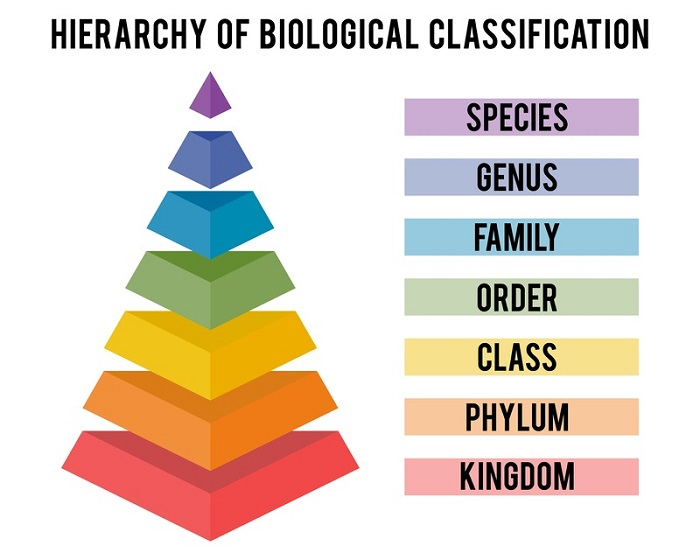
Greek philosopher Aristotle introduced the first system for categorizing living things. His classification scheme entailed classifying species according to a small number of traits, such as their habitat (land, water, or air), and sizes. Because many creatures did not fit into the few categories he had established, this classification system was too ambiguous. This classification system did not include many organisms.
Swedish biologist Carolus Linnaeus is the founder of taxonomy. He categorized and described numerous kinds of animals and plants in his work “Systema Naturae”. He increased the number of classification categories and divided creatures into seven taxonomic tiers ranging from more general to more detailed. For the classifications, he gave each organism a Latin name based on the position he assigned. The Kingdom is the highest taxon in the contemporary taxonomic system, which also includes seven other taxa: division, phylum, class, order, family, genus, and species. According to the binomial categorization system, the species is the lowest taxonomic level of an organism.
Carolus Linnaeus also developed the two-part Binomial Nomenclature, which gives each organism a unique name based on its genus and species, along with his expanded categorization system. When naming specific creatures using binomial nomenclature, Linnaeus developed several principles to make sure each species had a distinctive identifying name. Following are the guidelines:
- Scientific names always start with the genus.
- Always write species after the genus name.
- The scientific name begins with a capital letter for the first word and a small letter for the second word.
- Italicizing the genus and species is required (underlined if hand-written).
- The author’s name may be mentioned following the particular epithet. Mangifera indica Linn, for instance, denotes Linnaeus’s initial description of the plant.
The names refer to characteristics that the organism exhibits within the specific category. Because it gives organisms a common and precise name. It is crucial to adhere to the detailed guidelines above for naming organisms to ensure consistency and get rid of any ambiguity when talking about a specific organism. For instance, the tiger’s scientific name is Panthera tigris. Panthera is the genus name and tigris is the species name.
The plants and wildlife related to this algorithm are given distinctive applicable names. While the International Code of Zoological Nomenclature (ICZN) directs the systematic nomenclature of animals, the International Code of Botanical Nomenclature (ICBN) gives standards for the nomenclature of plants. Both of these codes have received worldwide acceptance and approval for the naming convention.
Explore our latest online courses and learn new skills at your own pace. Enroll and become a certified expert to boost your career.
Scientific Names of Animals
The common animals’ scientific names are listed below:
| Common name | Scientific name |
|---|---|
| Cat | Felis catus |
| Dog | Canis lupus familiaris |
| Lion | Felis leo |
| Tiger | Panthera tigris |
| Horse | Equus ferus caballus |
| Camel | Camelus camelidae |
| Cow | Bos taurus |
| Elephant | Proboscidea elephantidae |
| Sheep | Ovis aries |
| Donkey | Equus africanus asinus |
| King cobra | Ophiophagus hannah |
| Goat | Capra aegagrus hircus |
| Giraffe | Giraffa camelopardalis |
| Deer | Cervidae |
| Dolphin | Cetacea |
| Butterfly | Rhopalocera |
| Cockroach | Blattodea |
| Monkey | Simiiformes (infraorder) |
| House crow | Corvus splendens |
| Mosquito | Culicidae |
| Peacock | Pavo cristatus |
| Honey Bee | Apis |
| Pigeon | Columba livia |
Scientific Names of Plants
The scientific names of a few popular plants are provided below –
| Common Name | Scientific Name |
|---|---|
| Orange | Citrus aurantium |
| Banana | Musa paradisiaca |
| Potato | Solanum tuberosum |
| Rice | Oryza sativa |
| Tomato | Lycopersicon esculentum |
| Mango | Mangifera indica |
| Apple | Pyrus malus |
| Cashew nut | Anacardium occidentale |
| Cotton | Gossypium herbaceum |
| Garlic | Allium sativum |
| Jackfruit | Artocarpus integra |
| Lemon | Citrus limonium |
| Neem | Azadirachta indica |
| Onion | Allium cepa |
| Papaya | Carica papaya |
| Rose | Rosa |
| Sandalwood | Santalum album |
| Turmeric | Curcuma longa |
| Watermelon | Citrullus vulgaris |
Scientific Names of Extinct Organisms
The following is a list of scientific names for extinct animals:
| Common name | Scientific name |
|---|---|
| Dodo | Raphus cucullatus |
| Sabre-toothed Cat | Smilodon |
| T-Rex | Tyrannosaurus rex |
| Tasmanian Tiger | Thylacinus cynocephalus |
| Passenger Pigeon | Ectopistes migratorius |
| Moa | Dinornithiformes |
| Great Auk | Pinguinus impennis |