A large variety of inhibitors of RNA synthesis have been identified. The inhibitors fall into three groups. They are:
- Inhibitors acting by binding to DNA,
- Inhibitors acting by binding to RNA polymerase and
- Inhibitors acting by binding to RNA chain.
Inhibitors Acting by Binding to DNA
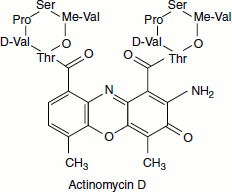
The best-known example of inhibitors that bind to DNA is actinomycin D, an antibiotic produced by Streptomyces antiboticus. The inhibition of RNA synthesis is caused by the insertion of its phenoxazone ring between two G-C pairs, with the side chains projecting into the minor groove of the double helix and hydrogen bonded to guanosine residues. This slightly impairs RNA polymerase binding, but RNA chain elongation in both eukaryotes and prokaryotes is blocked.
Ethidium bromide also intercalates into DNA and at low concentrations, it preferentially binds to negatively super-coiled DNA. It especially inhibits transcription in mitochondria, which contains supercoiled DNA.
Inhibitors Acting by Binding to RNA Polymerase
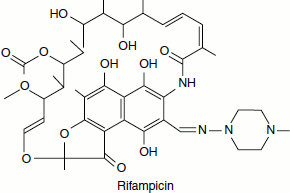
Rifampicin is a synthetic derivative of a naturally occurring antibiotic. it inhibits the bacterial DNA-dependent RNA polymerase, but not eukaryotic RNA polymerase. It binds tightly to the βsubunit. It does not prevent the binding of promoter or the formation of the first phosphodiester bond; however, it effectively prevents the elongation of RNA chains. It does not inhibit the elongation when added after initiation has occurred.
Another antibiotic called ‘streptolydigin’ also binds to the βsubunit and inhibits all bond formations. ‘α-amanitin’, a major toxic substance present in the poisonous mushroom Amanita phalloides, inhibits the eukaryotic transcription. The toxin preferentially binds to and inhibits RNA Pol-II. At high concentrations, it can also inhibit RNA Pol-III, but not RNA Pol-I or bacterial, mitochondrial or chloroplast RNA polymerases.
Inhibitors Acting by Binding to Growing RNA Chain
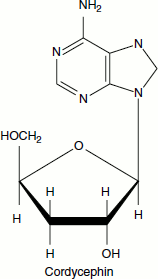
‘Cordycepin’ when 5′-triphosphorylated resembles NTPs and is incorporated into growing RNA chains by most RNA polymerases. It causes chain termination after incorporation, since it does not contain the 3′-hydroxyl group necessary for the formation of phosphodiester bond.
The inhibitors such as nalidixic acid, novobiocin and dichlororibobenzene (DRB) also inhibit transcription.