Introduction
Tissues are the supporting units found in living organisms throughout their bodies. These tissues are found in the bodies of plants and animals however they are different in structure and function entirely. These units have their own set of functionalities that supports different organs of the body. The tissues are made of cells and the plant and animal cells vary in terms of shapes and sizes.
What is a Tissue?
The union of cells forms tissue that is found in an organism and they share the same embryonic origin aiming towards a similar function. Multiple tissues accumulate to form a particular organ. The study of the plant tissues is called histology and the study of plant tissues is called plant anatomy.
Animal Tissue
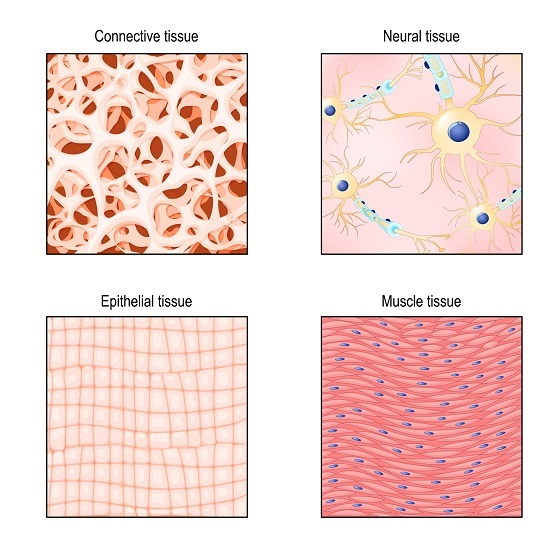
Figure 1: Animal tissues
There are four basic types of tissues to be found in animals with their own set of functions. The tissues are connective tissue, epithelial tissues, muscle tissues, and nervous tissues. The epithelial tissues are found on the upper layer of the body and the organs. Muscle tissues include the striated muscles and the nerve tissues are composed of the nerve cells.
Plant Tissues

Figure 2: Plant Tissues
Plants are multicellular organisms and their tissue system contains different cell types that carry different functions. The tissue system in plants is found in meristematic and permanent tissues. There are four different kinds of tissues in plants that are meristematic, vascular, dermal tissues, and ground tissues.
Explore our latest online courses and learn new skills at your own pace. Enroll and become a certified expert to boost your career.
Aim of the Experiment
The aim of this experiment is to study different tissues and respective shapes and sizes of plant and animal cells. The experiment will be conducted with the assistance of permanent and temporary slides.
Requirements
Permanent slides of the following are required −
- T. S of nerium leaf and lotus leaf along with the stem or petiole of the lotus plant
- V. S of the apex of the shoot and the root
- T. S of mentha stem or cucurbita stem
- Macerated materials of Tridax or Bougainvillea
Maceration Technique Requirements
- Safranin
- Glycerine
- Breaker
- Slides
- Cotton blue
- Twigs of locally available plants
- Needles
- Glass rod
- Tripod Stand
- Burner
- Microscope
- Wire gauge
- Knife
- Thread
- Muslin cloth
Maceration Fluid
- Chromic acid dissolved with an equal amount of 10% nitric acid
- Chromic acid is prepared with the addition of 100ml concentrated sulphuric acid, slowly in 10ml water.
- 50gms of potassium dichromate is to be added thereafter.
- 10ml of this solution is diluted further to 100ml and a working solution of maceration liquid is prepared.
Procedure
The following procedure is required to be followed −
- Some fresh younger branches are to be picked from a local wood plant with a thickness of a toothpick.
- The twigs are to be snapped to 0.5cm in length.
- The pieces are to be put in water containing beaker and are to be boiled for 15 minutes until the products settle at the bottom of the beaker, thereby removing air from the sample.
- The materials are to be shifted to a beaker that contains maceration fluid. They are needed to be boiled for 15 minutes until they turn pulpy.
- Muslin cloth is to be put on the mouth of the beaker and the materials are to be rinsed thoroughly in water to remove traces of maceration fluid.
- Drops of safranin are to be added to the material to stain the xylem or phloem; cotton blue.
- Stained material is to be put on a glass slide with a drop of glycerine on it
- Cells are to be divided further using needles
- The cover slip is to be added atop the slide and observations are then carried out under a microscope.
Analysis of the Slides
- T.S of Nerium leaf – for the spongy tissue
- T.S of lotus stem and lotus leaf – for aerenchyma
- V.S of the shoot and root apex – for meristem
- T.S of mentha stem or cucurbita – for simple tissues
Observation
These are the observations of the experiment −
- Chlorenchyma is the parenchyma cells that contain chloroplasts.
- Large intercellular spaces in cells mark the aerenchyma
- Protective tissues are the parenchyma tissues that are formed in the outer layer of leaves.