- Hammer dressing: A hammer-dressed stone has no sharp and irregular corners and has a comparatively even surface to fit well in the masonry (Figure 1.1).
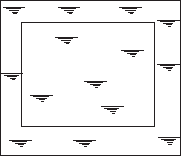 Figure 1.1 Hammer dressing
 - Chisel drafting: In this method drafts or grooves are made with help of chisels at all the four edges and any excessive stone from the centre is then removed. These stones are specially used in plinths and corners of buildings (Figure 1.2).
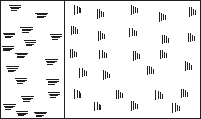 Figure 1.2 Chisel drafting
 - Fine tooling: This involves removing most of the projections and a fairly smooth surface is obtained (Figure 1.3).
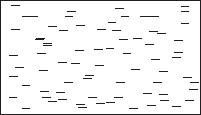 Figure 1.3 Fine tooling
 - Rough tooling: A rough-tooled surface has a series of bands, 4-5 cm wide, more or less parallel to tool marks all over the surface (Figure 1.4).
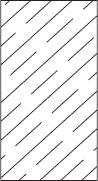 Figure 1.4 Rough tooling
 - Punched dressing: A rough-tooled surface is further dressed to show the series of parallel ridges. Chisel marks are left all over the face (Figure 1.5).
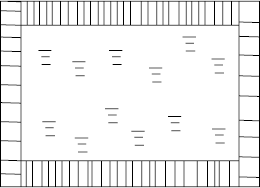 Figure 1.5 Punched dressing
 - Closed picked dressing: A punched stone is further dressed so as to obtain a finer surface (Figure 1.6).
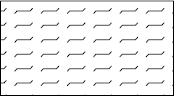 Figure 1.6 Closed picked stone surface.
Types of dressing