Introduction
- The organisms, which are eukaryotic, multicellular, and heterotrophic, are categorized as Animalia kingdom.
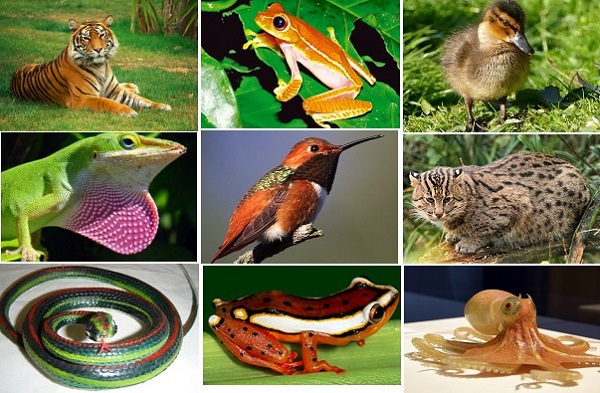
- The organisms of Animalia kingdom have no cell-wall.
- Most of animals of Animalia kingdom are mobile.
Classification of Animalia Kingdom
- Based on the extent and type of the body design differentiation, Animalia kingdom classified as −
- Porifera
- Coelenterata
- Platyhelminthes
- Nematoda
- Annelida
- Arthropoda
- Mollusca
- Echinodermata
- Protochordata
- Vertebrata
- Pisces
- Amphibia
- Reptilia
- Aves
- Mammalia
- Let’s discuss each of them in brief −
Porifera
- The literal meaning of ‘porifera’ is the organisms with holes.
- The organisms of porifera are non-motile and attached to some solid support.
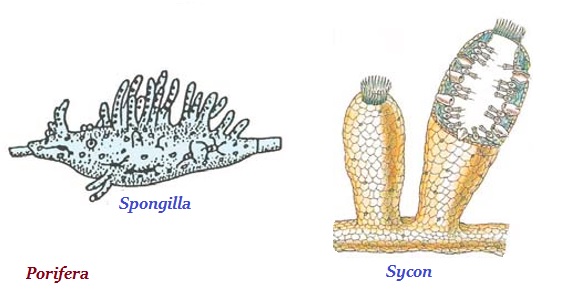
- The examples of this group are Sycon, Spongilla, Euplectelia, etc.
Coelenterata
- Organisms of coelenterata group live in water.
- The organisms of this group have cavity in their bodies.
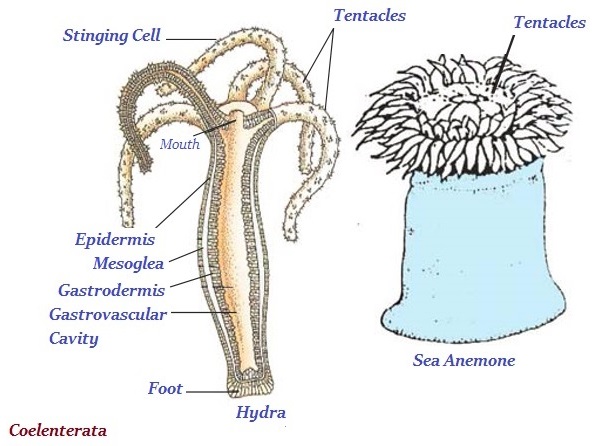
- Hydra and sea anemone are the common example of coelenterate.
Platyhelminthes
- The organisms of this group do not have true internal body cavity or coelom; so, they neither have well-developed organs.
- The bodies of organisms of this group are flattened from top to bottom; therefore, they are also known as flatworms.
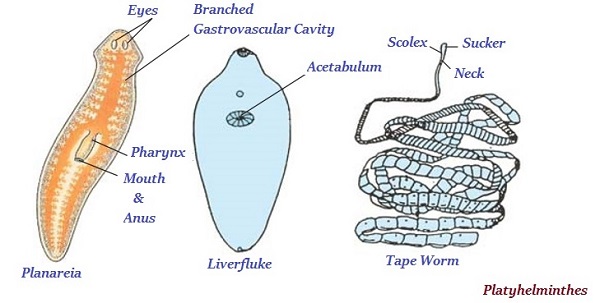
- Planareia, liverfluke, tape worm, etc., are the typical examples of this group.
Nematoda
- The organisms of nematode have cylindrical body.
- The organisms have tissue, but as such no well-developed body (i.e. no real organ).
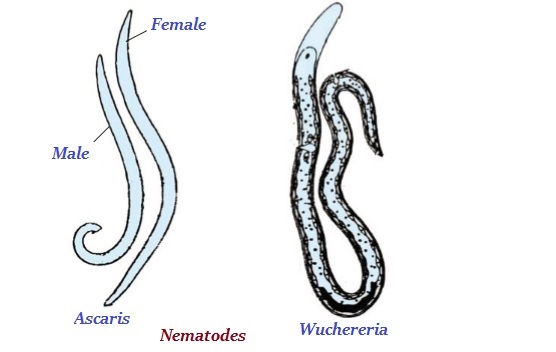
- The filarial worms (causing elephantiasis disease), roundworm in the intestines, etc., are the common examples of nematodes.
Annelida
- The organisms of annelida group live almost everywhere including fresh water, marine water as well as on land.
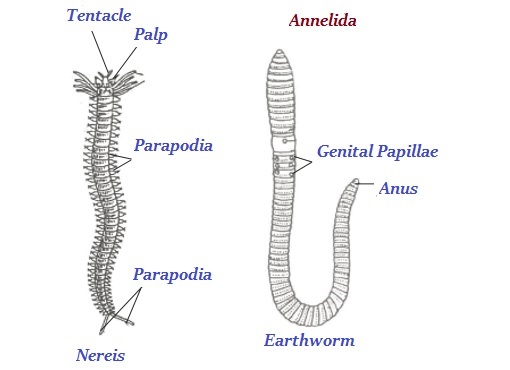
- Earthworms, nereis, and leeches are the familiar examples of annelida.
Arthropoda
- Arthropoda, probably, is the largest group of animals.
- The animals of this group don’t have well defined blood vessels rather there is an open circulatory system.
- The literal meaning of arthropod is jointed legs; so, they have jointed legs.
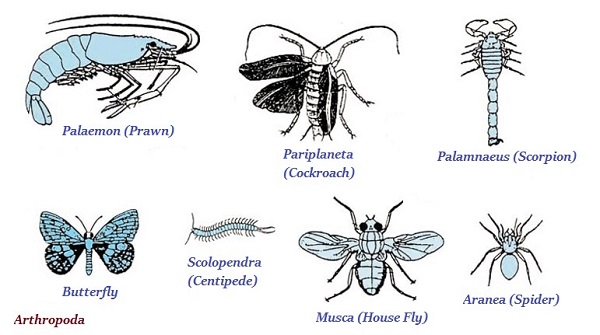
- Prawns, butterflies, houseflies, spiders, scorpions, etc. are the typical examples of arthropod.
Mollusca
- The organisms of mollusca are invertebrate.
- Most of the organisms of Mollusca group live in water.
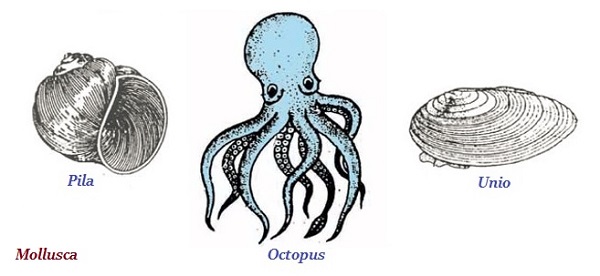
- Snails and mussels are the typical example of Mollusca.
Echinodermata
- The organisms of Echinodermata have spiny skinned.
- Echinodermata are free-living marine organisms.
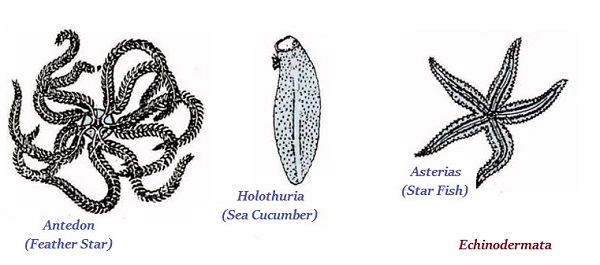
- The examples of echinodermata are starfish, sea urchins, feather star, etc.
Protochordata
- The organisms of protochordata are normally marine. E.g. Balanoglossus, Herdemania, and Amphioxus
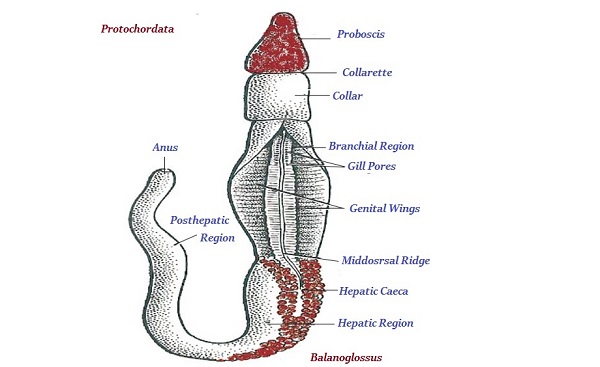
- The organisms of protochordata show a typical feature of body design, called as notochord; however, it does present there throughout the life.
Vertebrata
- Vertebrata has been discussed in a separate chapter.
Animalia Kingdom